Most first-time visitors to Muscat spend their time at the Grand Mosque, the Corniche in Muttrah, or one of the beach resorts, and never make it to the small walled quarter that gives the city its name. Old Muscat sits tucked between the harbour and the mountains, a compact district that's easy to underestimate on a map and easy to walk through in under an hour — but it's one of the few places in the city where you can still feel the older, pre-oil-boom shape of Muscat. Here's what's actually there and how to plan a visit around it.
What "Old Muscat" actually refers to
Old Muscat is the original walled city, distinct from the newer sprawl of Ruwi, Qurum, and the coastal suburbs that most visitors associate with "Muscat" today. It's a small, quiet quarter hemmed in by mountains on one side and the harbour on the other, and it still carries the layout of a place that was built to be defended — narrow approaches, a handful of gates, and government buildings clustered close together rather than spread across a modern grid. Traffic is limited and the pace noticeably slower than the rest of the city, which is part of what makes it worth the detour.
The gates
The old city was historically enclosed by a wall with a small number of gates controlling entry, and restored gates still mark those points today. Passing through one on foot is a fairly simple way to feel the transition from modern Muscat into the older quarter — the street noise drops, the buildings lower in height, and the whitewashed, low-rise architecture typical of the old government district takes over. The gates themselves are modest rather than monumental, so it's worth treating them as a threshold to notice on the way in rather than a standalone attraction to seek out on their own.
Al Alam Palace
The centerpiece of Old Muscat is Al Alam Palace, the ceremonial residence of Oman's Sultan. It's instantly recognizable from its façade — tall, brightly colored pillars in blue and gold frame the entrance, a striking contrast to the plainer buildings around it. The palace is a working royal residence rather than a museum, so visitors should expect to view it from the courtyard and surrounding plaza rather than tour the interior; it's the setting and the approach that make the stop worthwhile, not an inside look.
Flanking the harbour on either side of the palace are two older forts, built into the rock above the water. They predate the palace by centuries and are among the oldest structures still standing in Muscat, giving the whole waterfront a layered look — medieval fortification, ceremonial palace, and modern harbour traffic all visible in the same frame. Both forts are generally viewed from a distance rather than entered, but they add real visual weight to the area even from the plaza below.
Timing a visit
Old Muscat is compact enough to see well in 45 minutes to an hour, which makes it easy to combine with other stops rather than treat as a full outing on its own. Mornings tend to be quieter and cooler, particularly outside the winter peak season, and the light on the palace's pillars is generally softer and more even before midday than it is under the harsher overhead sun later on. Because the quarter has limited shade, an early start is worth prioritizing during the hotter months.
There's no real crowding to plan around here the way there is at some of Muscat's more famous stops — it tends to stay unhurried even during the busier winter tourist months, which is part of its appeal.
Where photography fits in
Al Alam Palace's plaza is one of the more visually distinctive backdrops in Muscat for photos — the colored pillars and the forts on the water behind give a shoot a completely different look from the clean marble lines of the Grand Mosque or the resort settings further down the coast. I occasionally build sessions around this stretch of Old Muscat for travelers who want a portrait or two with that layered, historic waterfront in frame, usually as a short addition rather than a full separate session.
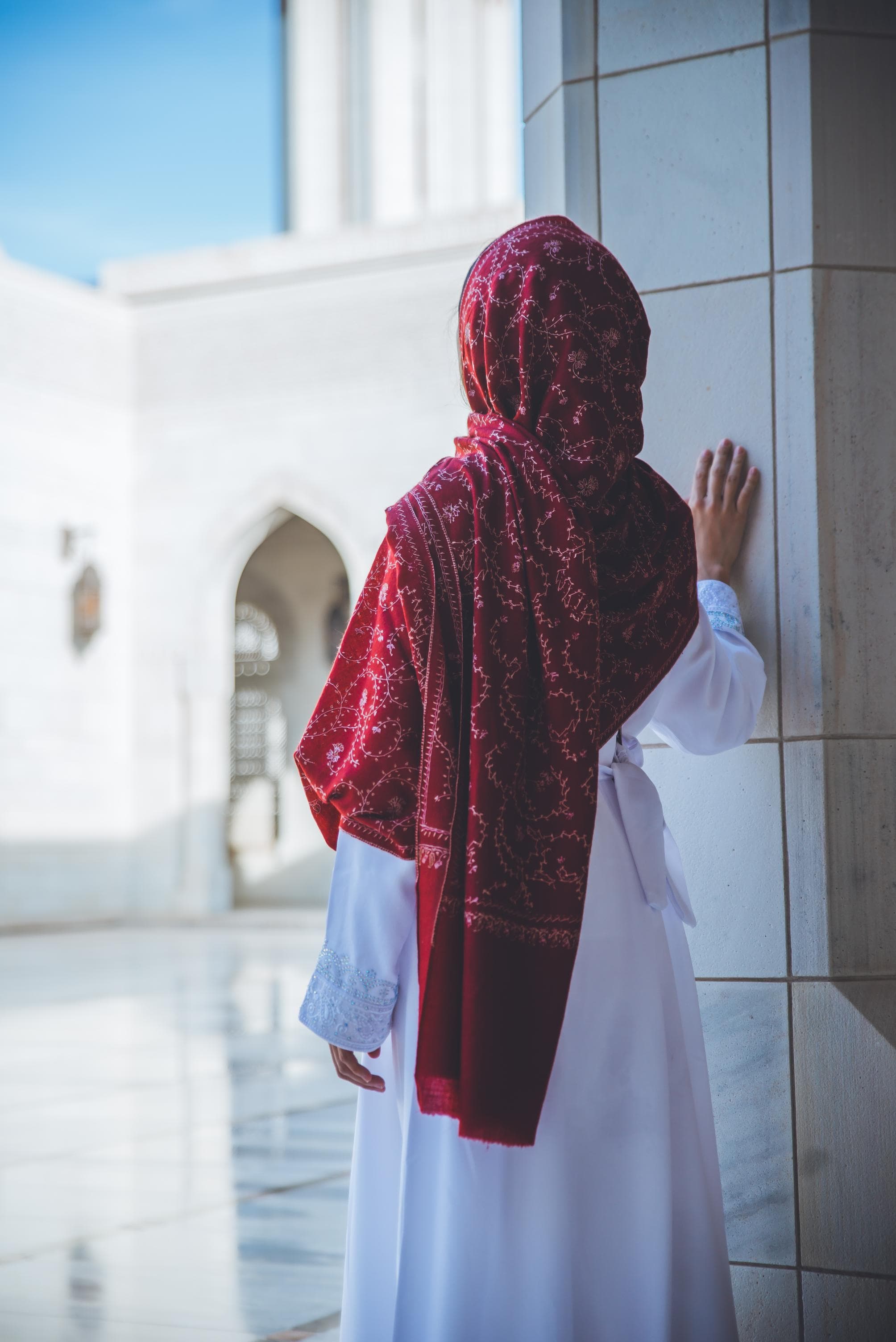
Because Old Muscat sits a short drive from the Grand Mosque, it also works naturally as a second stop on the same morning as a Grand Mosque session — the light window that suits the mosque's courtyard tends to still be workable by the time you reach the palace plaza afterward, so it's rarely a scheduling headache to fit both into one outing. For visitors who only have a single morning free in Muscat, pairing the two is usually a more efficient use of time than treating them as separate trips.
Practical notes
Modest dress is a sensible default anywhere near government and royal buildings in Muscat, even though Old Muscat doesn't enforce the same specific dress code as the Grand Mosque. Photography from the public plaza and street areas is generally fine, though it's worth being mindful around any security personnel or barriers near the palace gates themselves, and avoiding photographing government buildings beyond the palace and forts.
Getting there is easiest by taxi or car, since the quarter isn't really set up for public transit and most hotels sit a reasonable drive away. There's limited parking directly in the old quarter, so a short walk in from a nearby spot is usually part of the visit regardless of how you arrive.
Bringing it into a Muscat itinerary
Old Muscat rewards visitors who treat it as a quiet pause between the city's bigger draws rather than a headline stop in its own right — the contrast with the Grand Mosque's scale or Muttrah's bustle is part of what makes it memorable. If you'd like to build a photography session that moves between the Grand Mosque and this stretch of Old Muscat in one morning, message me on WhatsApp at +968 9584 2090 with your travel dates and I can help plan a route that makes the most of the light at both.
Ready to book your Muscat session?
Message on WhatsApp for availability during the September–January season.
Message on WhatsAppOr call/text +968 9584 2090 directly