Almost every visitor to Oman ends up handed a small cup of kahwa and a date at some point, often before they've even asked for one. It's less a menu item than a greeting, and understanding what's actually going on when it's offered makes the rest of an Oman trip easier to read — from a shop owner's welcome in Muttrah Souq to a more formal sit-down with an Omani family. Here's a practical primer on the ritual, and where in Muscat to experience it properly.
What kahwa actually is
Omani coffee, kahwa, is not the espresso-based coffee most travelers are used to. It's a light, unfiltered brew made from lightly roasted beans, usually flavored with cardamom and sometimes saffron or cloves, served without milk in small handleless cups called finjan. The color is closer to pale amber than dark brown, and the taste is more aromatic and spiced than bitter. It's traditionally poured from a long-spouted brass or copper pot called a dallah, which shows up constantly in Omani visual identity — on currency, in hotel lobbies, and as a decorative motif around the country.
The serving size is intentionally small. A finjan typically holds only a few sips, because the etiquette assumes refills rather than one large cup. It's common to be offered a second or third round, and it's equally normal to stop after one or two.
The role of dates
Dates are served alongside kahwa as a near-constant pairing, not as a separate snack. Oman grows a wide range of date varieties, and the sweetness of the fruit is meant to balance the more bitter, spiced notes of the coffee — the two are eaten close together rather than one after the other. Dates carry real historical weight in the region as a staple food that kept desert communities fed long before modern trade routes and refrigeration existed, and offering them alongside coffee is one of the oldest continuous hospitality customs across the Arabian Peninsula.
Quality and variety matter to Omanis in a way that's easy to miss as a first-time visitor — there's a real difference between a softer, caramel-like date and a firmer, less sweet one, and shopkeepers in the souq will often talk through the differences if you show interest.
Reading the etiquette
A few small customs are worth knowing before the cup arrives. It's polite to accept with your right hand, and if you'd like a refill, simply hold your cup out again — no need to ask verbally. To signal you're finished, a light shake or wobble of the cup as you hand it back is the conventional way to decline another pour without saying anything. None of this is strictly required of tourists, and Omani hosts are generally relaxed about visitors who don't know the gestures, but picking up on them tends to be well received as a sign of genuine interest rather than performance.
This hospitality ritual isn't reserved for special occasions — it happens in business meetings, in homes, and very often in shops, where being offered a coffee is sometimes simply part of doing business rather than a sign you're expected to buy something.
Where to experience it in Muscat
Muttrah Souq, along the old harbour corniche, is one of the more natural places to encounter the ritual as a traveler rather than seeking it out separately. It's one of the oldest working markets in the country, and many of the stallholders — particularly in the sections selling frankincense, textiles, and dried goods — still offer coffee to browsing customers as a matter of course. Wandering the narrow covered alleys in the late afternoon, once the day's heat has eased and the light through the doorways turns warm and low, is also simply one of the more atmospheric ways to spend an hour or two in Muscat regardless of whether coffee comes up.
A few dedicated Omani coffee houses have also opened around Muscat in recent years, aimed at both locals and visitors who want a slower, seated version of the ritual with more explanation of what's being served — worth seeking out if the souq's fast pace doesn't leave room for lingering.
Where photography fits in
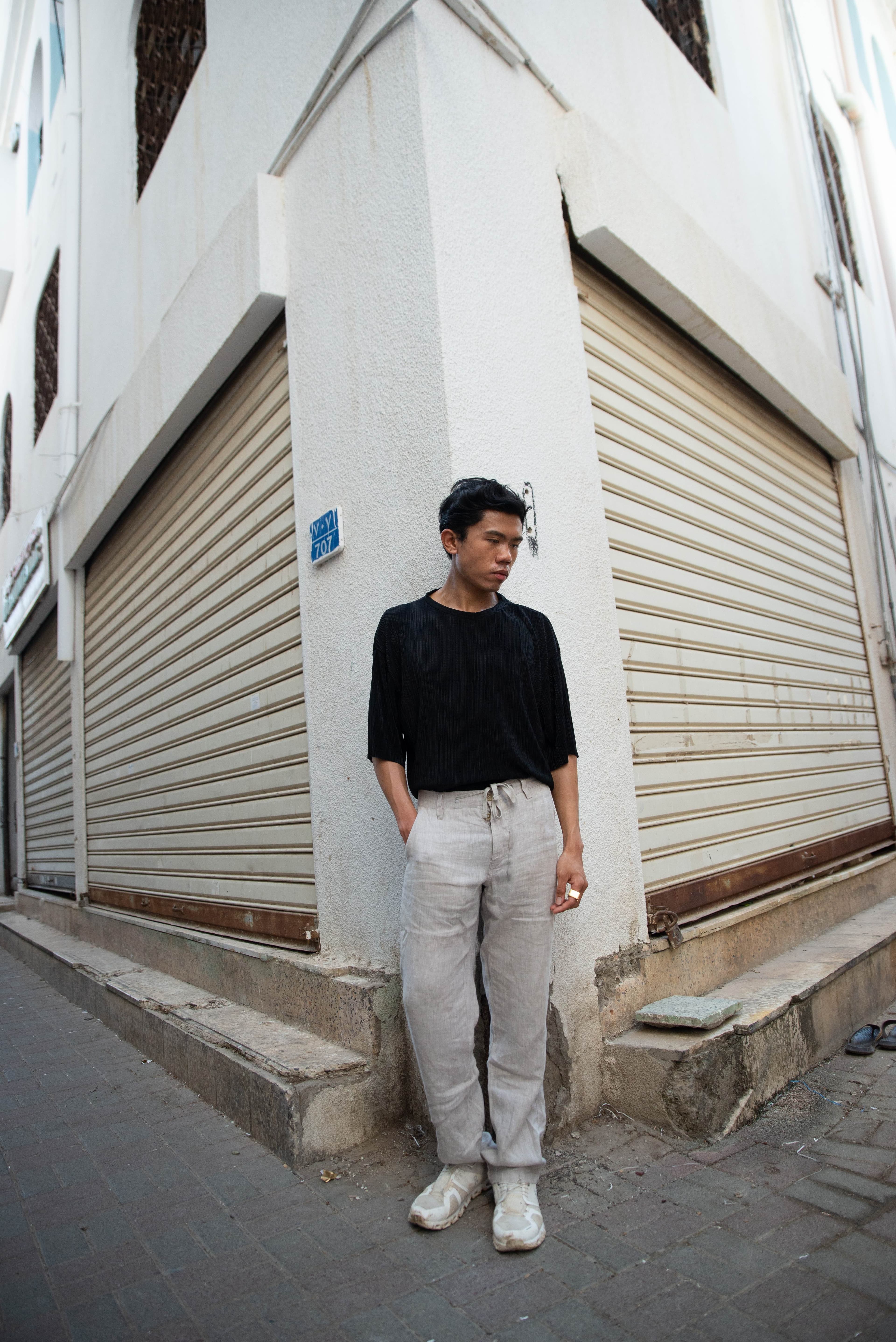
Muttrah's souq and corniche are also one of the more reliably photogenic corners of Muscat, which is part of why I run portrait sessions there — see our Muttrah photography guide for timing and etiquette tips. The alleys' warm, filtered light, the dhow boats lined up along the harbour at golden hour, and the general texture of a working market give a session a very different feel from the cleaner, more formal backdrops elsewhere in the city — it tends to suit travelers who want their photos to feel like part of the trip rather than a staged stop bolted onto it. If a coffee stop with a stallholder happens naturally along the way, it usually ends up part of the memory of the session rather than a detour from it.
Late afternoon into early evening is generally the easier window for both the souq's light and its crowd levels, which also happens to line up well with when the alleys feel most alive — shops re-opening after the midday lull, and the corniche filling up as the heat breaks.
A simple way to plan around it
If a Muscat itinerary already includes wandering Muttrah Souq — and for most first-time visitors, it should — there's no need to treat coffee culture and photography as two separate items on the list. A short portrait session along the corniche or through the souq's alleys can sit naturally around the same hour as a coffee stop, without adding an extra outing to an already full day.
If you'd like to build a Muttrah session around your trip, message me on WhatsApp at +968 9584 2090 with your travel dates, and I can suggest a time that works well with both the light and the souq's rhythm. See packages and pricing to get started.
Ready to book your Muscat session?
Message on WhatsApp for availability during the September–January season.
Message on WhatsAppOr call/text +968 9584 2090 directly