Sur and the Sultan Qaboos Grand Mosque are two of the most memorable stops a visitor can make in northern Oman, and they could hardly be more different. One is a working harbour town where wooden dhows are still built by hand; the other is a polished marble complex with sweeping courtyards and colonnades. Both are best seen in soft light, and both take more time than people expect — so the order you visit them in matters.
Which should you visit first, Sur or the Grand Mosque?
Do the Grand Mosque first, on a separate morning if you can, and save Sur for a day when you can start early and not worry about getting back. The mosque welcomes non-Muslim visitors during set morning hours, and those hours are fixed, so it makes sense to anchor your itinerary around them rather than trying to squeeze the mosque in after a long drive. Check the current visiting hours before you go, since they can change and Friday is typically restricted for tourists.
Sur, by contrast, is flexible. The yards are best in open morning light or the softer light late in the day, but there's no strict opening window to build around, which makes it an easier "second day" activity.
Is Sur a realistic day trip from Muscat?
Yes, but it is a full day rather than a half-day add-on. Sur lies well along the coastal road southeast of Muscat, and most travelers find that the driving takes up a large share of the day. Plan on an early start, and treat any stops on the way — a sinkhole, a wadi, a beach — as part of the same long loop rather than extras to tack on casually.
Once you arrive, the harbour rewards a slow walk. Hulls in various stages of construction, exposed timber ribs and the tools around them give the yards a texture that feels very different from a museum display. For a more detailed look at what the trip involves and how it compares with the harbour closer to home, see our earlier piece, Sur and the Dhow-Building Harbour: Is the Day Trip From Muscat Worth It?.
What makes the Grand Mosque a good counterpoint to Sur?
The contrast is the point. Sur is about craft, wood, water and a lived-in town; the Grand Mosque is about scale, symmetry and calm. Photographically, you move from rough, warm textures to clean lines and pale stone. Travelers who see both tend to come home with a much fuller picture of Oman than either stop would give alone.
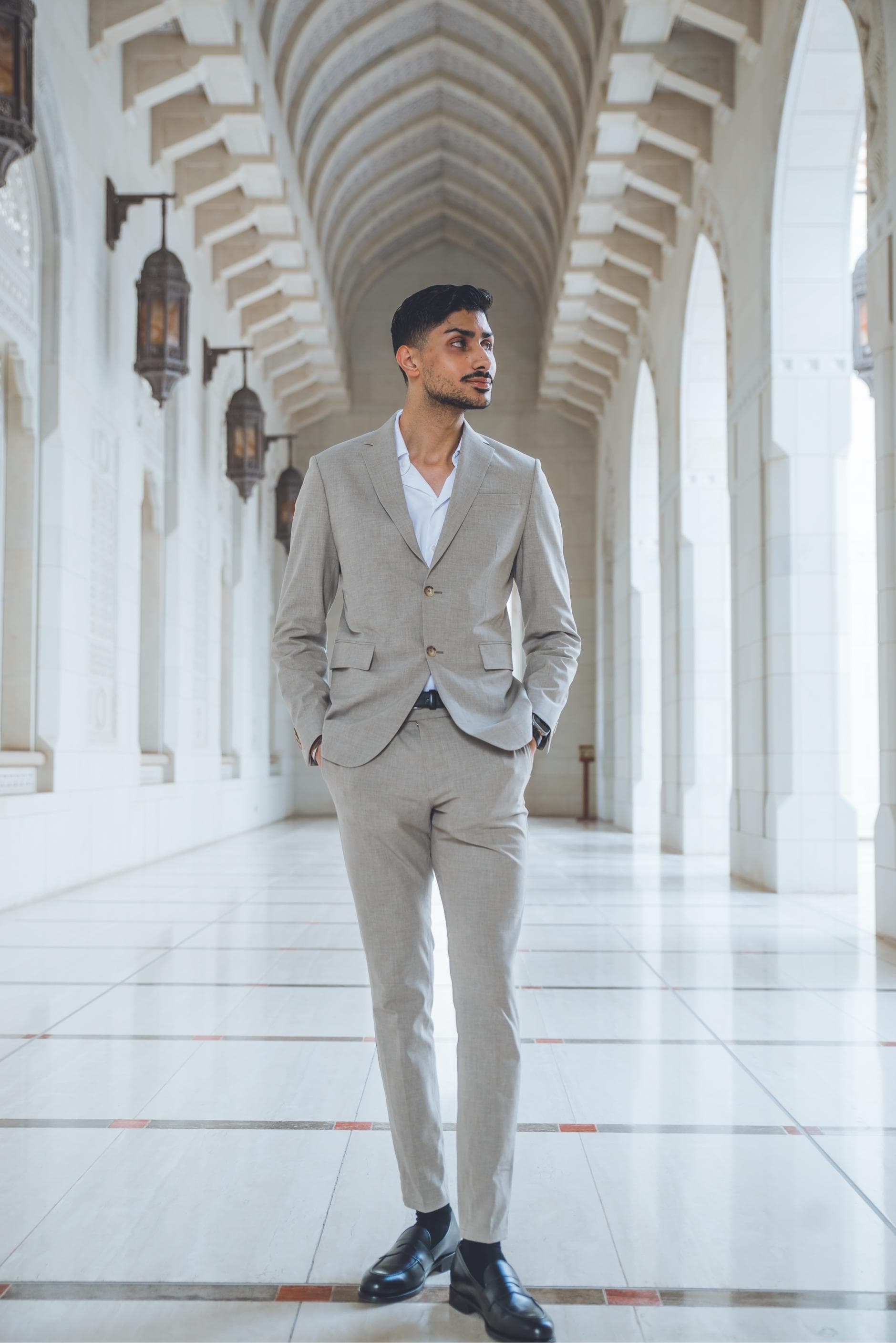
At the mosque, most visitors spend roughly an hour in the main courtyard and along the colonnades before the crowds build. Modest dress is required for everyone — shoulders and knees covered, and a headscarf for women in the prayer-hall areas — and it happens to photograph well against light stone. Loose, flowing fabric in ivory, sand or soft blue usually looks best. Our guide to the best time for golden hour photos at the Grand Mosque covers how the morning light moves across the courtyard.
A simple two-day sequence
Here is one way to lay it out, which you can adapt to your own pace:
- Day one, morning: Arrive at the Grand Mosque near the start of visiting hours. Spend the first hour in the courtyard and colonnades while the light is soft and the crowds are thin.
- Day one, afternoon: Rest, then head to the corniche or souq in Muttrah for a lower-key evening by the water.
- Day two: Start early for the coastal drive to Sur. Walk the yards in the first good light, spend time around the harbour, and leave yourself a comfortable buffer for the drive back.
If your trip is short, it's perfectly reasonable to choose one and skip the other. Many travelers with only a couple of days in Muscat decide the drive to Sur isn't worth the hours on the road, and that's a fair call.
What should you bring for photos at both places?
Pack light, breathable layers that cover shoulders and knees so you're ready for the mosque, and comfortable closed shoes for uneven ground at the boatyards. A hat and water are sensible for the coastal day. If you're shooting on a phone, a quick wipe of the lens before each stop makes a noticeable difference, and keeping the sun behind or beside you rather than in front will usually give more flattering results at both locations.
Where portraits fit into the plan
Sur works well for candid, documentary-style travel photos, but its distance and the long drive make it difficult to schedule a proper portrait session around. The Grand Mosque is a different story: its fixed morning window, shaded colonnades and clean backdrops make it one of the easiest places in Muscat to get a polished portrait of yourself, your partner or your family. Having a local photographer who already knows where the light will fall at a given time means you can enjoy the visit instead of worrying about angles.
If you'd like a session built around the mosque's best morning light, and timed to fit around a Sur trip or the rest of your itinerary, message Imran on WhatsApp at +968 9584 2090 with your travel dates and group size. You can also see packages and pricing before you get in touch.
Ready to book your Muscat session?
Message on WhatsApp for availability during the September–January season.
Message on WhatsAppOr call/text +968 9584 2090 directly