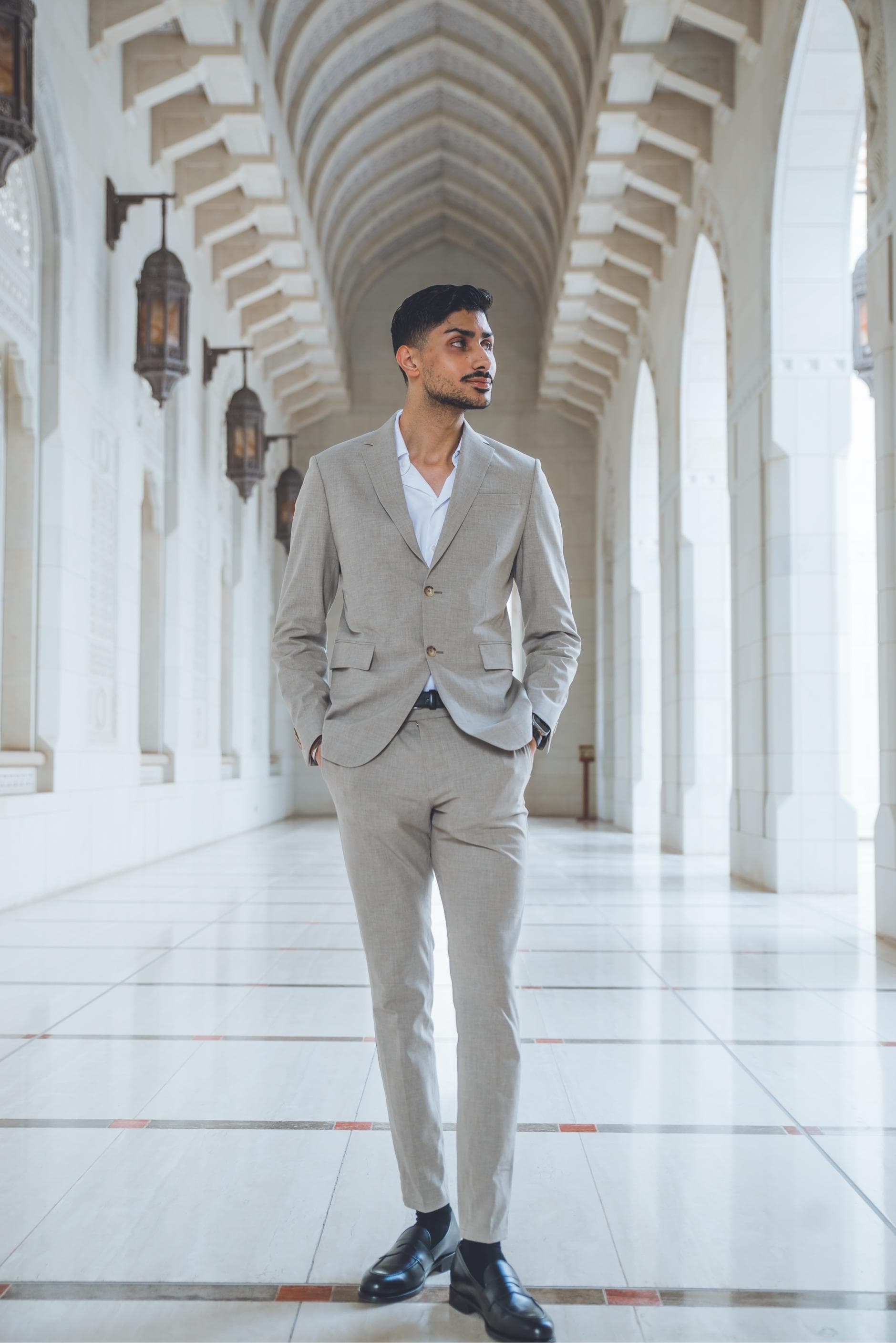
Two of the most-photographed places in Oman couldn't look more different. One is a canyon of pale limestone and turquoise pools reached by boat and scramble; the other is a marble courtyard beneath carved domes, still and formal in the early light. Travelers with only a few days in the country often assume they have to choose between "adventure Oman" and "cultural Oman" — in practice, a short trip has room for both, as long as the order and timing are planned rather than left to chance.
Why these two don't fit on the same day
Wadi Shab sits along the coastal road between Muscat and Sur, roughly a two-hour drive each way, and most visitors spend two to three hours at the site itself once the boat crossing, the walk in, and time at the pools are added up. That's realistically a full day on its own. The Sultan Qaboos Grand Mosque, by contrast, is a short trip from most Muscat hotels and best visited in its own narrow morning window — the courtyard is open to non-Muslim visitors only during set hours, typically Saturday through Thursday, and closed to tourism on Fridays. Trying to stack both into one day usually means rushing the mosque's fragile morning light or arriving at Wadi Shab too late to enjoy it before the midday heat sets in.
So how do you sequence them?
The simplest approach is to treat them as separate mornings a day or two apart, rather than one packed itinerary. A common pattern for a four- or five-day Muscat trip: an early Grand Mosque visit on one morning, timed right at opening for the softest light on the marble and the fewest people in frame, followed by a slower day exploring the city. Then, on a different day, an early departure for Wadi Shab, ideally before 8am, to beat both the crowds at the parking area and the worst of the midday sun on the exposed rock sections of the trail.
Building in a rest or transit day between the two also matters more than it might sound — Wadi Shab involves genuine scrambling over wet rock, and arriving at the mosque the next morning still stiff from a canyon hike tends to make for a less comfortable visit than most people expect.
What to bring for each
For the mosque, modest dress is required of everyone entering the complex — shoulders and knees covered, with a headscarf for women in the main prayer hall areas. Loose fabric in soft, neutral tones tends to photograph better against the white marble than anything tight or brightly patterned. For Wadi Shab, the packing list is almost the opposite: water shoes for the rocky, slippery sections, a swimsuit under light clothing, a dry bag for a phone or camera, and reef-safe sunscreen, since there's very little shade along the trail.
Where photography fits into a trip like this
Because the Grand Mosque's best light lasts less than an hour after opening, it's exactly the kind of session that benefits from a photographer who already knows where the light falls and isn't spending half the visit figuring it out on the spot. A guided portrait session timed to that morning window — the courtyard, the colonnades, the reflecting pools near the entrance — gives a set of formal, well-composed photos that most visitors wouldn't get shooting on their own phone in a crowd. It's a nice contrast to the more candid, adventure-style shots that naturally come out of a Wadi Shab hike, and pairing the two gives a trip a genuinely varied set of photos rather than a phone roll that's all one register.
If a formal portrait session isn't the priority for the mosque morning itself, it's still worth having a plan for at least a few intentional shots there — the light and setting are hard to recreate anywhere else in Muscat, and it's one of those places where regret tends to show up only after the trip is over and the photos don't match the memory.
How do you get to Wadi Shab from Muscat?
Most visitors drive themselves or hire a driver for the day, since there's no train or regular public transport option along the coastal highway south past Quriyat. A rental car is common enough for this route, though a booked driver takes the guesswork out of the return leg, especially if the day runs long. The wadi's parking area sits close to the road, with local boatmen waiting at the water's edge to run the short crossing at the start of the trail. It's worth having small cash on hand for that crossing, since card payment isn't a given at the water's edge.
Once across, the trail follows the canyon upstream over uneven rock, crossing the stream a few times before reaching the pools that make the hike worth doing in the first place. The final stretch to the hidden cave near the end requires swimming through a narrow gap in the rock, so anyone not fully comfortable in open water should plan to turn back before that point rather than push through it.
Rounding out the rest of the trip
For travelers who want a cultural counterpoint to Wadi Shab that's closer to the city than the mosque, the walk along Muttrah's corniche and souq in the late afternoon is a reasonable substitute or addition — different pace, different light, and it doesn't require the same early start the mosque and the wadi both do.
If you'd like to build a Grand Mosque portrait session around your Wadi Shab day trip, message on WhatsApp with your travel dates and I'll help find a morning slot that works with the light and the rest of your schedule — see packages and pricing to get started.
Message on WhatsApp to plan your session
For more on timing the mosque visit itself, see Best Time for Golden Hour Photos at the Grand Mosque.
Ready to book your Muscat session?
Message on WhatsApp for availability during the September–January season.
Message on WhatsAppOr call/text +968 9584 2090 directly