Most first-time visitors to Oman picture the coast — the Grand Mosque, the corniche, a resort with the mountains dropping into the sea. Fewer expect that a couple of hours' drive inland, the landscape turns into rolling orange dunes that stretch to the horizon. Wahiba Sands is that desert, and it's become one of the most popular add-ons to a Muscat-based trip precisely because it feels so different from everything along the coast. Here's what actually goes into visiting it.
Where is Wahiba Sands and how far is it from Muscat?
Wahiba Sands sits roughly three hours south-east of Muscat by road, in the direction of Sur. Most visitors reach it by rental car with a 4x4 for the final stretch, or by booking a driver or organized safari that handles the whole route including the sand itself, which isn't passable in a standard car. The drive out is straightforward highway until the final approach, where the road gives way to tracks through the dunes and a bit of navigation experience — or a guide — becomes genuinely useful.
Day trip or overnight — which makes more sense?
A day trip is possible but tight: by the time you've driven three hours each way, there's only a few hours left for the dunes themselves, usually just enough for a dune-bashing drive and sunset. Most travelers who make the effort to get out there choose to stay a night at one of the desert camps instead, which turns the trip from a rushed drive into something closer to the actual experience people picture when they imagine an Oman desert safari — a camp under a genuinely dark sky, dinner outdoors, and both a sunset and sunrise over the dunes rather than just one.
If your schedule only allows a day, it's still worth it for the dune-bashing and the change of scenery, but building in an overnight stay is the version most people come away happiest with.
What actually happens on a desert safari
The core of most Wahiba Sands trips is dune-bashing — being driven over the dunes in a 4x4 by a driver experienced with the terrain, which is as much a ride as it is transport. Beyond that, typical camp packages include a camel ride or short trek, a traditional dinner, and time to just sit out on the sand as the light changes, which tends to be the part people remember most. Some camps also offer sandboarding on the steeper dune faces for anyone who wants a more active stop along the way.
None of this requires special fitness or desert experience — it's a guided, fairly comfortable way to experience a landscape that would otherwise be difficult and genuinely risky to navigate independently.
What should you pack for a desert safari?
Light, breathable layers work best during the day, with something warmer for the evening — desert nights cool down noticeably once the sun is down, even after a hot afternoon. A scarf or bandana helps if the wind picks up sand while you're out on the dunes, and it's worth bringing a phone or camera you're not precious about, since sand tends to find its way into everything. If you're staying overnight, most camps provide bedding, but it's worth checking in advance what's included versus what you should bring yourself.
Pairing the desert with a resort stay back on the coast
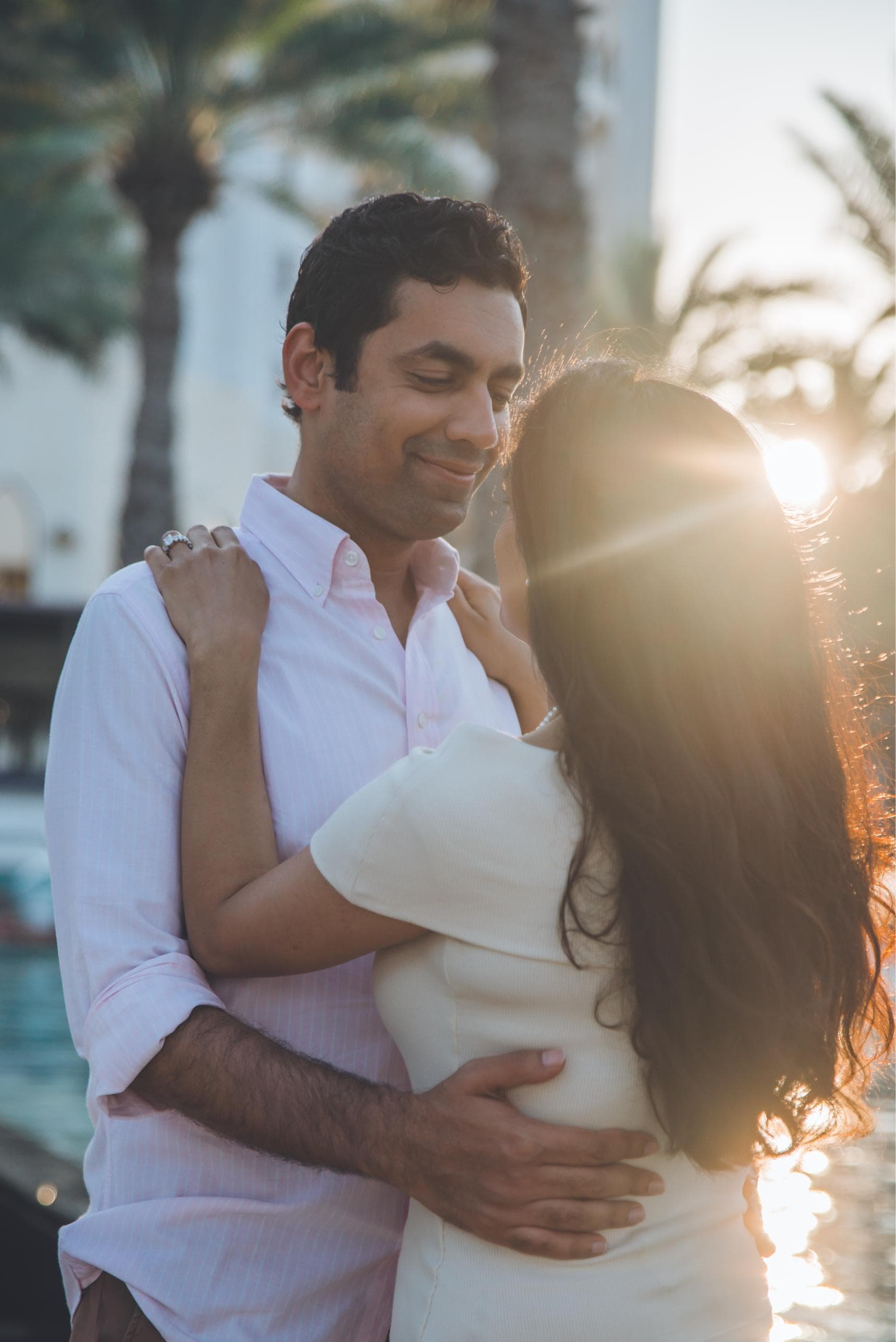
The contrast between a night in the dunes and a night back on the coast is part of what makes this pairing work so well for visitors splitting their trip between Muscat's two very different landscapes. After a dusty, active day or two out at Wahiba Sands, many travelers head back toward the coast to unwind somewhere calmer before flying out — and the Bar Al Jissah resort coastline, with its private coves and the mountains dropping straight into the sea, is a natural place to do that. It's also, in my experience, one of the better settings for a portrait session that follows a desert trip: the tone is completely different from the dune photos — soft golden light on calm water instead of dust and orange sand — and having both sets from one trip gives a genuinely varied record of the two sides of Oman.
If a resort session is part of the plan, it's worth scheduling it for an evening after you're back from the desert rather than the day you arrive, since a few hours to rest and unpack usually makes for a more relaxed, less travel-worn set of photos.
When is the best time to visit Wahiba Sands?
The cooler months, roughly October through April, are the easiest time to visit — daytime desert heat during the summer months can be intense enough to limit how much time is comfortable outdoors, even with air-conditioned vehicles for the drive itself. Evenings at the camp are pleasant year-round once the sun is down, but the middle of the day in summer is genuinely tough in open desert. If a summer trip is your only option, an early departure and a schedule built around the cooler parts of the day makes it far more manageable.
Fitting it into a longer Oman itinerary
Because Wahiba Sands sits a few hours from the city and works best with an overnight stay, it's very much a multi-day-trip addition rather than something to squeeze into a single busy day in Muscat. If you're still working out how many days to spend in the city versus further out, One Day or Several? Planning a Muscat Itinerary Around a Photo Session walks through how that kind of trade-off tends to play out.
Planning the trip
A night in the dunes followed by a relaxed evening back on the coast is one of the more memorable combinations an Oman trip can offer, and it photographs beautifully on both ends if you want more than phone snapshots to bring home. If you'd like to build a resort session at Bar Al Jissah around your Wahiba Sands dates, message me on WhatsApp at +968 9584 2090 and I can help find a time that fits once you're back from the desert — see packages and pricing to get started.
Ready to book your Muscat session?
Message on WhatsApp for availability during the September–January season.
Message on WhatsAppOr call/text +968 9584 2090 directly