Most visitors to Muscat build their trip around the coast — the harbour at Muttrah, the beaches, the mosque courtyard — and never make it inland to Nizwa, one of Oman's former capitals and still one of its most atmospheric towns. It's an easy day trip from the city, and if your visit happens to land on a Friday morning, it comes with one of the more memorable, least-staged experiences you'll find anywhere in the country: the weekly goat market.
How far is Nizwa from Muscat?
Nizwa is roughly a 90-minute to two-hour drive inland from Muscat, depending on traffic through the mountain pass on Route 15. The road is well paved and the drive itself is part of the appeal — you leave the coastal humidity behind and climb gradually toward the foothills of the Hajar Mountains, with the terrain turning drier and rockier the further you get from the sea. Most people do it as a single long day trip, leaving Muscat early and returning by evening, though it can also be combined with a night in Nizwa if you want to add nearby Jabrin Castle or the mountain villages around Jebel Akhdar to the itinerary.
What's actually at Nizwa Fort?
Nizwa Fort is a large 17th-century fortification built around a massive circular tower, with narrow stairways, defensive murder-holes, and a rooftop that opens onto views over the town's palm groves and the surrounding mountains. It was built primarily for defense rather than as a palace, so the interior is more about thick walls, dim passages, and functional design than ornate decoration — a different feel from the marble and tilework most visitors associate with Muscat. The climb to the top is worth the effort: the rooftop view over the date palm plantations and the old town below is one of the better vantage points in inland Oman, and it photographs particularly well in the mid-morning before the haze builds up.
The fort sits directly beside Nizwa's old souq, a covered market selling everything from silver Khanjar daggers and pottery to dates and dried limes, and it's easy to spend an hour or two wandering both together. Nizwa is also known regionally for its pottery workshops on the edge of town, where you can still watch pieces being thrown and fired using techniques that have changed very little over generations — a worthwhile stop if you have extra time before or after the fort.
What actually happens at the Friday goat market?
The Friday goat market is a genuine livestock auction, not a tourist demonstration — farmers from around the region bring goats, sheep, and cattle to sell, and the trading happens in a fast-moving circle with buyers inspecting animals and haggling in real time. It runs early, generally starting around sunrise and winding down by mid-morning, so arriving early is essential if you want to see it at its busiest. It's loud, crowded in the best way, and one of the few places in Oman where you can watch a centuries-old trading tradition still functioning exactly as it always has, with no performance for visitors involved. Photography is generally welcome from a respectful distance, though it's worth asking before photographing individual sellers up close, as you would at any working market.
Because the market only runs on Fridays and wraps up by late morning, it's the one part of this trip that requires planning your day around a fixed schedule rather than the fort and souq, which are open most days of the week.
When is the best time of year to visit Nizwa?
The cooler months, roughly October through March, are the most comfortable for a Nizwa day trip, since the inland heat away from the coast can climb higher and drier than Muscat during the summer, especially by early afternoon. This lines up conveniently with Muscat's own peak travel season, so most visitors end up planning the Nizwa trip and a coastal or mosque photo session within the same week rather than treating them as separate visits. If you can only travel in the warmer months, an early start is even more important, both for comfort and to catch the fort and market before the midday sun flattens the light.
Pairing Nizwa with a Muscat photo session
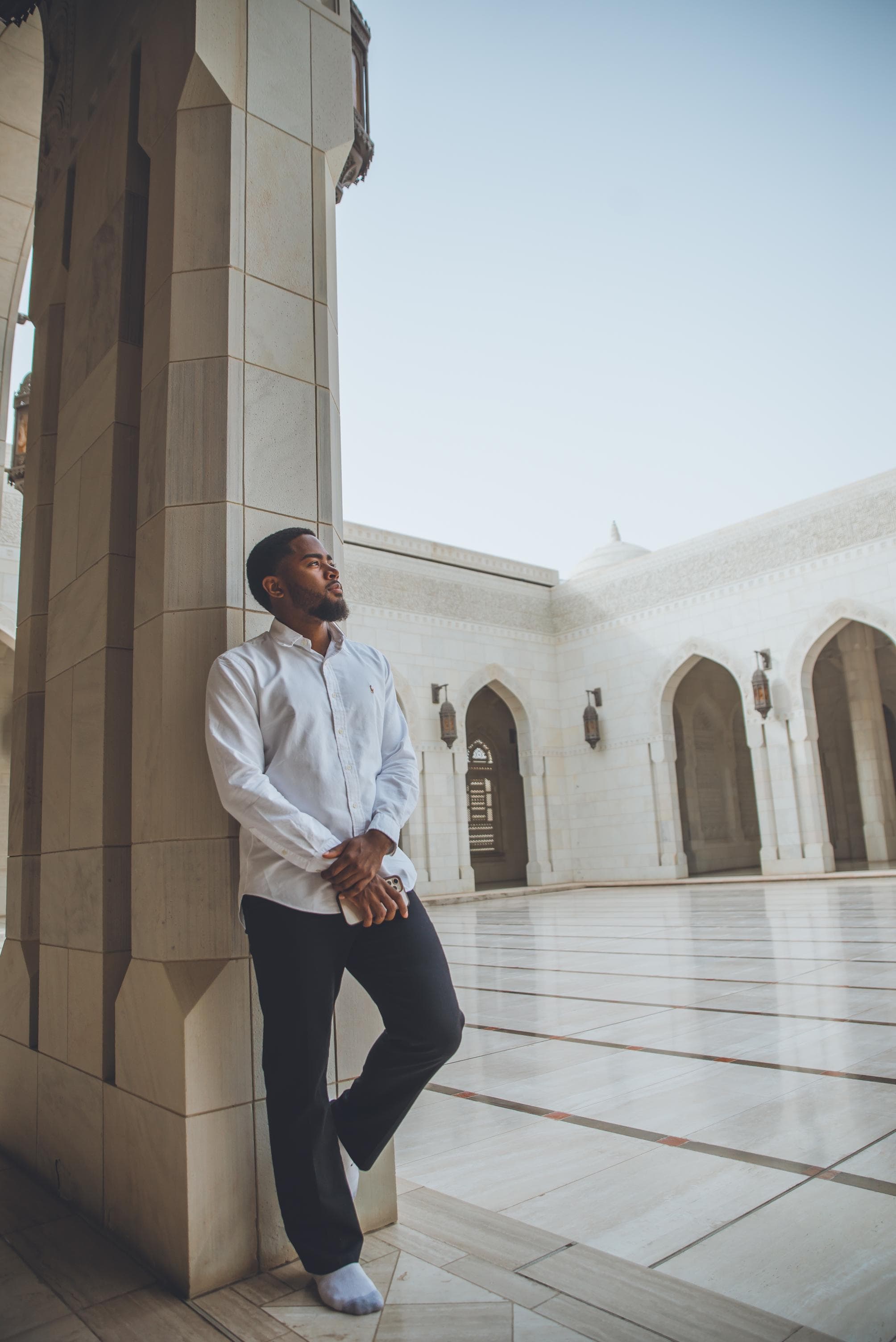
A Nizwa day trip works well bookended by a session back in the city, since the two locations offer such a contrast in texture — the weathered stone and market chaos of Nizwa against the scale and polish of the Sultan Qaboos Grand Mosque's marble courtyards. Travelers often do the mosque either the morning before heading out to Nizwa or the evening after returning, when the light softens and the courtyard empties out. If you're already planning your trip around historic and cultural sites, it's worth reading about Old Muscat's gates and Al Alam Palace as well, since it covers similar ground closer to the city and pairs naturally with a Nizwa day trip on a multi-day itinerary.
What to bring and wear
Nizwa gets noticeably hotter and drier than the coast, especially by midday, so bring water, sun protection, and comfortable closed shoes for the fort's uneven stone stairs. The same modest-dress guidelines that apply at the Grand Mosque are a sensible default for the souq and market too — light, breathable fabric that covers shoulders and knees will keep you comfortable and photograph well against both the fort's stone walls and the mosque's marble.
If a Nizwa day trip is part of a longer Muscat stay, it's an easy addition to a portrait session — the fort visit in the morning, market if it's a Friday, and a golden-hour session at the Grand Mosque or another Muscat location later the same trip or the next day. You can see packages and pricing for how a session like this fits together, and if you'd like to build a day around it, message Imran directly on WhatsApp to plan the timing around your trip.
Ready to book your Muscat session?
Message on WhatsApp for availability during the September–January season.
Message on WhatsAppOr call/text +968 9584 2090 directly